


William Gustave Simons
Last week in Germany, Hitler’s notorious mountain retreat, the Eagle’s Nest, burned down.
The news carried me back more than a quarter-century – to an ancient Bavarian cemetery where I was astounded to discover my own name on a grave. After all, you don’t see your name on a gravestone every day.
The encounter became part of an eerie, almost mythic convergence, as though some invisible thread had drawn me to that distant place.
And the journey began – where else – in the improbable world of tennis rackets.
My relationship with racket companies began just before I started Inside Tennis. In 1980, as a writer for a short-lived sports business magazine, I was covering the Super Bowl and entered a media tennis tournament sponsored by Head rackets.
Impoverished and desperate to win first prize, a racket, I went all out, captured the title, and collected my Head Legend racket, which long remained my trusted on-court weapon.
Years later, when I walked into the San Diego headquarters of the Pro Kennex racket company, there was a huge sign in the lobby that said, “Welcome Bill Simons – Publisher, Inside Tennis.”
Wow – such tonic for my ego. “Hey, buddy,” I told myself, “that’s not too shabby.”
Better yet, as my tennis magazine began to thrive and I became a player in the industry, I got a string of invites to the headquarters of racket companies.
Visits to Prince in New Jersey and Wilson in Chicago were pleasant outings. Going to Babolat’s office in an old, garden-like villa in Lyon was a delight. But to journey to a hidden village deep in a dense Japanese forest to see the factory where, amid an array of Anna Kournikova posters, Yonex rackets were produced – that was unforgettable.
But nothing matched my October 1999 junket to Germany. When Boris Becker became an owner of the Völkl racket company, I was invited to their headquarters.
I agreed to go – but only if I got an interview with Becker.
Völkl met me at the Munich airport and whisked me off to a rowdy Oktoberfest biergarten, where I got plastered and, much to the delight of my hosts, found myself atop a table dancing with glee as accordions blasted away.
Fortunately, I was able to sober up enough by the next evening, when I found myself in Becker’s black SUV as he drove me down the Autobahn to his country club south of Munich. There, as we enjoyed our gourmet bratwurst, I asked him why he rebuffed the effort by English writers to dub him “Boom Boom” Becker.
He bristled, referenced the brutality of the bombings in World War II, and said he was always a bit of a contrarian. He explained that he got his against-the-grain streak from his mother, who’d been interned in a Nazi camp in Czechoslovakia.
“She was a Jew,” Boris confided.
OMG.
I immediately realized that, because traditional Jewish law passes Jewish identity through the mother, Becker – perhaps Germany’s greatest sports hero of the post-Hitler era – would be considered Jewish.
After my splendid time with the great star, I had a couple of extra days and went to the Munich tourism bureau and asked, “Where should I go? But, God forbid, don’t send me to some touristy place with a big castle.”
They mentioned a town and added, “You’d better run off and catch the train.”
So I headed east for a few hours and got off in Berchtesgaden. I had no idea where I was. So once again, I headed to the tourism office.
There, a man was astounded: “Don’t you know what Berchtesgaden is all about? This is where Hitler’s mountain retreat – the Eagle’s Nest – was.”
“You have to be kidding,” I told myself, and then asked the man what I should do.
“Well,” he said, “my wife leads a great tour to the Eagle’s Nest at 2 p.m. Do that, but first head up to the old city and check out the ancient cemetery that dates back to the 17th century – it’s incredible.”
So off I went, and soon found myself strolling through centuries of graves.
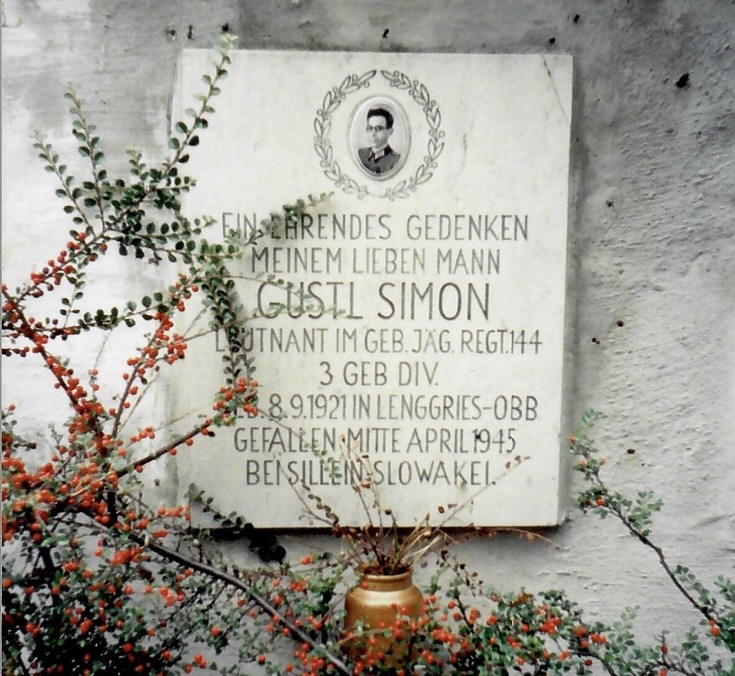
Finally, I came to the World War II section, and there I spotted it – a grave for a mountain infantryman named Gustl Simon, a lieutenant in the Luftwaffe, the German air force, who died in mid-April 1945.
Oh my God – Gustl. That’s the Bavarian diminutive for Gustave, and that’s my family name. My great-grandfather was Gustave, my father was Gustave, and my middle name is Gustave.
And my family surname was Simon until, decades ago, my father changed it to Simons. So the man buried here had essentially the same name as mine – and he’d died right around when I was born, on April 12, 1945, the day President Franklin Roosevelt passed.
So, what had brought me to this astonishing moment? And who was this young, unknown man who, in the chaotic twilight of war, had died in the Alps just as I took my first breaths in an American suburb?
I stood there as a brisk wind blew through the cemetery and imagined that final, shattering spring of war: President Roosevelt dying in Georgia and Gustl Simon losing his life in the Alps. Yet, in that same narrow window of time, the name Gustave Simon was carried forward across the Atlantic by a newborn in America.
To me, it felt like a quiet commentary on time and heritage, bold in its suggestion, yet somehow beyond my grasp.
But now I had to hurry to catch the van tour to the Eagle’s Nest.
Over the years, I often journeyed to historic sites of infamy or military history. On my trip to that Yonex factory, I also traveled to Hiroshima. One year, while covering the French Open, I left Paris to go to the Normandy coast and walk the sands of Omaha Beach at dawn on D-Day. In New York, I made a pilgrimage to Ground Zero, where sorrow still hung.
But it was something else to wind my way up that infamous German mountain, past Alpine meadows and impeccable clay tennis courts, to a wicked site I’d seen time and again on TV.
As an anti-war zealot and a lapsed meditator, I decided that when I got to the Eagle’s Nest, I’d go off by myself, meditate, and send out some peace vibes to the universe.
How splendid.
But it turned out the woman conducting the tour was a compelling storyteller. She explained that she was the wife of the man I’d met at the tourism center, and (follow me here) his aunt had been a beautiful young woman of royal Indian heritage who was the first female radio operator Britain sent behind enemy lines in World War II to help the French Resistance. But she was captured, tortured, and eventually executed by the Nazis.
“Hold on,” I interrupted. I then breathlessly explained that back in California, in Marin County near San Francisco, I’d studied for years with the spiritual teacher Pir Vilayat Khan, who taught a very westernized, New Age version of Sufism. And Pir Vilayat’s sister – like her husband’s aunt – was said to be the first woman radio operator sent behind enemy lines by British intelligence.
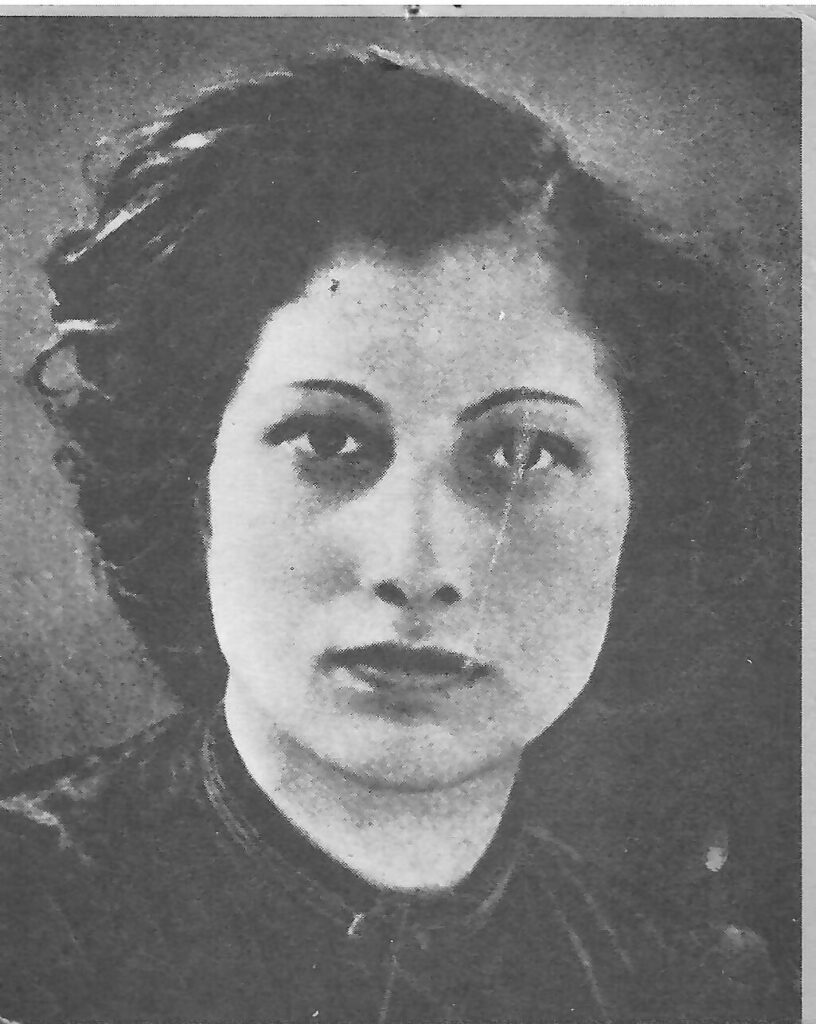
In fact, they were the same heroic woman: Noor Inayat Khan, whose code name was Madeleine. A daring spy in Paris, she was captured, tortured for months, and then taken to Dachau, where she was shot in the head.
Just before her death, she called out one word: “Liberté!”
Within just a couple of hours, I had encountered the grave of a German infantryman who bore essentially my own name and died just as I was born – and discovered that my tour guide was related to Noor Inayat Khan, the martyred sister of my Sufi teacher and a woman who had long inspired me.
To this day, I honor Noor with a haunting photograph in my home. And now, with the Eagle’s Nest burned down, I find myself returning once more to that Bavarian mountainside – to Gustl’s grave, Noor’s sacrifice and two astonishing encounters separated by only a couple of hours.
I still cannot explain what brought all this together. I only know that the universe we pass through is thick with unseen threads and mysteries that baffle and inspire.















OMG Bill, what an amazing story. I love your writing. Thanks so much for sharing it with us. I traveled to Poland and to Germany several years ago and toured both Auschwitz camps. It was such an incredible. saddening and educational experience. I’ll never forget it.
I always couldn’t wait for Inside Tennis to arrive in my mailbox in the past. I always read it immediately and couldn’t get enough of the smaller tidbits as well as the longer stories. I was so disappointed when it folded but receiving your essays during the 2026 Grand Slams and at other times and being able to chat back and forth a bit with you has been so great and healed somewhat my disappointment !!! I’m still way way way behind on many of the latest ones you wrote (life happens, right?) but I’ve saved them and will get to them eventually.
Thanks again so much for sharing your awesome story.